
My main instruments are piano and guitar. Sure, when I was in my twenties, I played enough bluegrass fiddle to get by, but I long ago decided to leave the string instruments to the pros. When I was in the studio on Monday with a string ensemble, recording a film score I’d written, I realized just how much I have come to rely on the subtle expertise that good string players bring to a session. The concertmaster, Teri Lazar, knew exactly what to tell everyone about articulations, bowing, and dynamics, and she said it with such perfect string-player shorthand that I almost forgot to be amazed at how her instructions made the session go perfectly. Tools like Sibelius may make it easy for people like me to put dots on a page and write “Violin I” at the top of it, but string music can’t come alive without the depth of wisdom that resides in the hands, eyes, and hearts of the players. Fiddlers, I love you. And to anyone else who lends their years of practice and expertise to help create and improve on the music in someone else’s head: I love you too.
– Charlie's Blog –
Noir for Cello and Orchestra
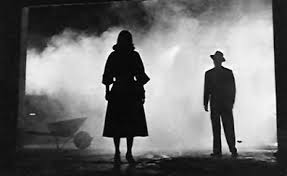 While I was composer-in-residence at the University of Wisconsin in Stevens Point last fall, I made the acquaintance of the cello professor there, Lawrence Leviton. Along with being a terrific player, he has a deep interest in film music and teaches a couple of fascinating courses on the subject. A love of film music is something we have in common, and in our talks on the subject, I ended up offering to write a cello concerto for him inspired by our mutual interest in film noir. Recently, I finished the 23-minute piece. Its five movements are named after common film noir conceits, including “Car Chase” and “Who Are You, Lady, and How Did You Get in Here?” I’ve posted the Sibelius synthesizations and scores here. I can’t wait to hear this piece performed by human beings.
Eco-Charlie
 My good friends, the fine filmmakers David Hanrahan and Joe Fab, recently finished a short film for the Everglades Foundation. They asked me to score it, and I was happy to write music that combined strings, horn, and acoustic guitar. It always feels good to write for a cause that is so easy to believe in. My only regret is that they did not ask me to go to Florida to truly drink in the atmosphere and warmth of the Everglades National Park.
At the same time, I was also scoring a film for Conservation International. It is part of their “Nature is Speaking” series and was narrated by Harrison Ford. Their temp track was from Steve Reich, so I obviously included marimbas and woodwinds in my work. And once again, I found myself thankful to Steve Reich for writing the way he has for the past 40 years. He was an inspiration for this film and has been an inspiration to me for much of my life.
Film Festival News
Elissa Leonard’s biopic Sally Pacholok, which I scored, will be premiering at Filmfest DC tonight. I can’t wait to see it on the big screen. Sometimes the films I work on have their premieres far away, and I end up missing the screenings. That is exactly what is happening with Jonathan Gruber’s documentary Miriam Beerman: Expressing the Chaos. That premiere will be taking place at the Palm Beach International Film Festival. Sadly, I will not be going to Florida to warm up!
New Orleans: Music, No Matter What
I was in New Orleans for the past week. According to my friend Bill, if you are nomadic and musical by nature, you might stop traveling when you get there. Music is everywhere. It was outside on the street even when it was uncharacteristically cold (I mean cold…27 degrees cold. It was freezing in every building, because the buildings are built to keep the steamy summer heat out).
I stopped to hear a lone banjo player on Dauphine Street playing for no one, while ice formed at his feet. At the club Bachannal, patrons huddled outside under heat lamps while a Ben-Webster-sounding saxophonist and his band played through a raft of 1930’s swing tunes. I want to know what it is about that city that keeps music flowing as steadily as the Mississippi, even as the Polar Vortex tries to stop it?
Here in the top half of the USA when the temperature drops, we treasure the silence that snow and cold bring. The streets of New Orleans completely resist that notion. Starting yesterday, there were parades to celebrate Mardi Gras, which won’t arrive till February 17. Glitter was everywhere. And the music cut through the cold air like a warm knife through butter. I’m going to try and bring more of this energy to my life and not simply hibernate, waiting for spring. I’m going to get out my tenor banjo and see if I can melt the snow on my porch with it.
Suffer the Medium-Sized Children
 I have always wondered what sort of Gandhi-esque character it takes to teach elementary school music. A million years ago I taught at the junior high level, and it nearly broke me. But earlier this year, I decided that I really, really wanted a children’s chorus to open for my band, Chaise Lounge, at our annual hometown Christmas concert. Since no music teacher wants to take on another concert at this time of year, the only solution was for me to start a glee club at my local elementary school. For the past six weeks, I have been rehearsing holiday classics with fourth-grade volunteers after school. I think I now see that you don’t have to be a saint to do this. You just have to show up and accept the kids as they are: with all their energy, earnestness, chatter, and distractability coming at you all at once. I don’t think I have put together an award-winning performing group, but these kids sing with passion. At the show, they will perform eight songs by themselves, and then join Chaise Lounge for the first song of our set: “Snow Day,” a local hit with students and teachers alike. When this all started, I wasn’t sure I would be up to the task. Now I find that I am already thinking about next year.
Writing for Strings
I was recently approached by the music director of a string ensemble with one of my favorite requests. He wants his group to play in concert with Chaise Lounge. We love to perform with full orchestras—if you’re anywhere near Stevens Point, Wisconsin on December 6 or 7, I hope you’ll come hear us with the Central Wisconsin Symphony Orchestra. I have written several pieces just for strings, but it will be a new challenge to write string accompaniments for Chaise Lounge. (Naturally, I jumped at the chance to try.) One thing that’s great about orchestrating for strings is their flexibility in terms of size: a string group can be as intimate as eight or nine players or as large and sweeping as the lush sound of fifty players. The fun will be found in integrating all the things a string ensemble can do into a Chaise Lounge arrangement that’s already pretty tight. Stay tuned!
New CD: Gia Mora Sings Charlie Barnett
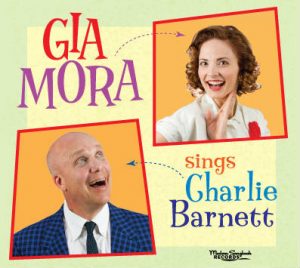 I have recorded with many wonderful singers in my life, but maybe none who can inhabit a song the way the actress Gia Mora does. When we set out to make her second album, Gia Mora Sings Charlie Barnett, I gave her total access to my catalog, including my film and stage work as well as pieces I’ve written over the years for my jazz band, Chaise Lounge. It was amazing to see what she picked and why. Her ideas on some of the songs completely transformed them. For instance, on “One Thing I Have Learned About the Weather,” which I wrote for a documentary about a fallen soldier, she suggested that we take a simple 4/4 folk-ish song and twist it into a slow Cajun waltz with some stray bars left in for dramatic effect. The result was startling, even to me. I couldn’t be prouder of this record. We will debuting some of these songs in Los Angeles on November 20 at Vitello’s Jazz and Supper Club. If you’re in the area, I hope you can come by.
Steve Lawrence walks in…
Last week I was lucky enough to do some recording in Los Angeles at the legendary Capitol Studios. Yes, that one! The one in the iconic Hollywood building whose architecture is meant to evoke a stack of 45s.
My singer was late—no big surprise there—and I found myself warming up on the nine-foot grand piano in Studio A. The soundproof door of the studio opened, and an older man with a big smile walked in. “Sounds great,” he said.
“I’m just playing scales,” I replied.
“Hey,” he said kindly, “there are scales, and there are scales.” And then he introduced himself: “Steve Lawrence.” That took a second to register. It was indeed Steve Lawrence of Steve and Eydie. He looked terrific—or should I just say that, at 79, he looked exactly like Steve Lawrence has always looked.
Steve and his wife Eydie Gormé were a part of my show business education in the ’60s and ’70s. Back then, I was in the thrall of a lot of sub-par ’60s rock, so it took me a while to admit how very good Steve and Eydie were. But I finally got there. Eydie was an amazing singer, and Steve was the perfect partner for her, in music and in life. She died last year. They were married for 56 years.
After gushing over how great he looked, I grabbed an opportunity that will only come once. I asked him to sing a song with me. He walked to the piano and said, “Sure, give me a B flat.” I did, and without a pause he began singing “The More I See You.” Luckily, I know that song. And for the next three minutes I was living in a 1962 dreamscape where I was suddenly part of the hippest fraternity on Earth—call it Sigma Alpha Hepcat—made up only of great musicians who know terrific songs and perform them in Studio A or at The Sands in Vegas. It was a fantasy, but for those three minutes, it was also very real. Steve’s voice is still young and strong and perfectly his own. And I really do know that song.
Then it was over. My singer arrived. She had no idea who Steve Lawrence was. I was forced to return to 2014. It was a great moment, though. Thank you, Steve.
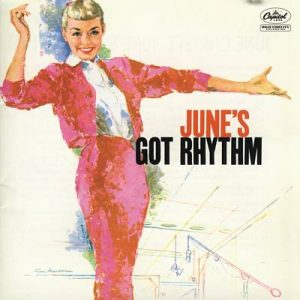
For our session, we used one of Capitol’s classic microphones. It was the Neuman U-41 that has the tin Capitol emblem on it. It has been there since 1963. I have pictures of that exact microphone on at least three record covers. The one I like best is from a June Christy album called June’s Got Rhythm. The microphone is a faint drawing at the bottom right. It always seemed to me that only true insiders would know which mic that was. The true insiders are, of course, thousands and thousands of people who have seen pictures of Frank Sinatra, Nat King Cole, Dean Martin and Sammy Davis Jr. singing into that exact same mic.
We also used the famous reverb tank underneath the studio. I later posted on Facebook a picture of the patch bay inputs that tied the vocal track to that analog reverb. One of my favorite responses to that picture was: “Capitol Recording Studios, where it’s always 1962.”
Happy Father's Day… to me.
I’m so lucky to be a father to three smart, beautiful daughters.