
Playbill’s notice re: When We Get There

Playbill’s notice re: When We Get There

In December, after working together online for nearly two years, I finally met one of my two collaborators on the musical When We Get There, which tells the story of a road trip to the fateful 1965 voting rights march in Selma, Alabama. Richard Lasser of Seattle, who wrote the book for the show along with Robert P. Young of Detroit, joined me in New York to meet with two of our production partners. As I’ve mentioned before, this show will have its first reading in New York, with sponsorship from the Jamaica Center for Arts & Learning in Queens. Richard and I had dinner with the show’s director, Pat Golden, and our producing partner, Leonard Jacobs. After all this time of working remotely, to meet with these partners face to face gave our show a new sense of reality. Since then, we’ve all been hard at work arranging for a venue and starting to cast this reading, which as of now is most likely to happen in April. Stay tuned for more.
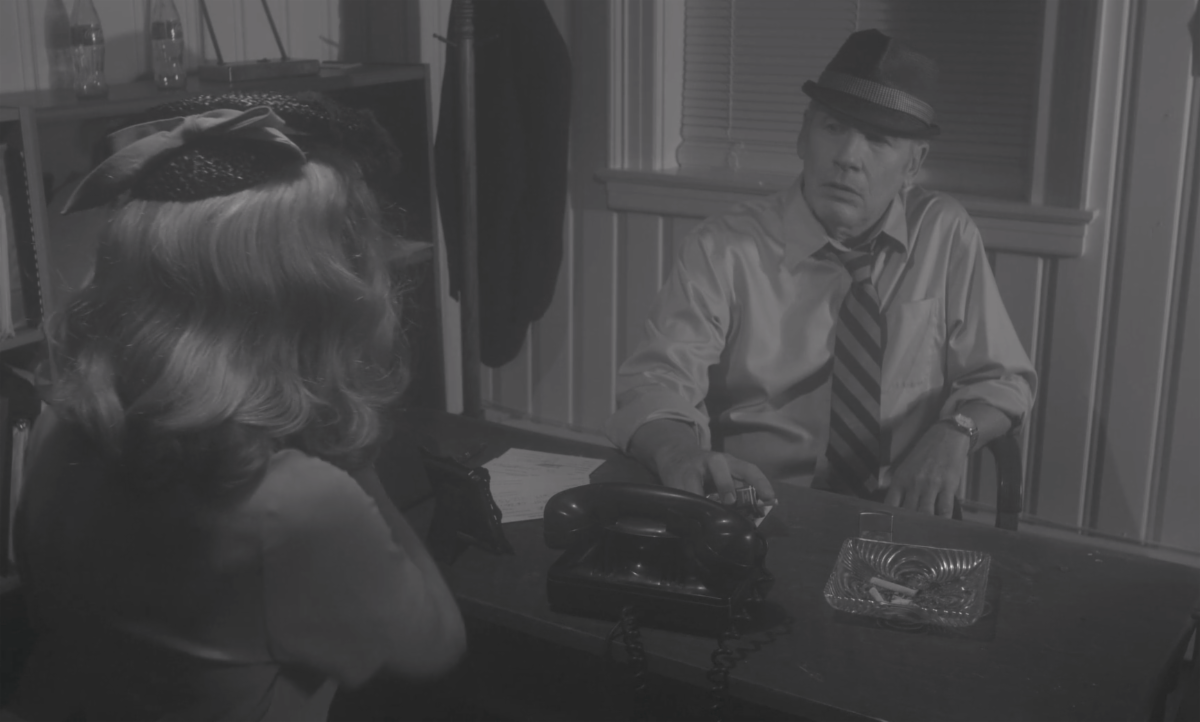
My bucket list of film projects just got smaller: I finally had the chance to score a real detective film noir. Private is a black-and-white two-hander starring its director, Steve Blackwood, and one of my favorite actors, Sandy Bainum. During the course of the scoring, Steve referenced the immortal Bernard Herrmann’s work for Alfred Hitchcock. After being completely intimidated, I found it invigorating to try and find an emotional equivalent to Herrmann’s work in several scenes. Private will be out in festivals later this year.

Over the spring and summer, I wrote a musical that’s a departure from my earlier stage work. Set in Tennessee, True North a sort of fairy tale, not based on any historical event (though World War II makes a brief appearance). The show is still in a very early stage of development, so I decided to bring some singers into the studio so that I could hear how the songs were working. Thanks to the skill and talent of seven wonderful singers—Alan Naylor, Jennifer Timberlake, Valerie Rigsbee, Abby Middleton, Chris Rios, Chelsea Majors and Rich Follett—I was able to hear ten of the songs performed beautifully. You can hear a few of these songs on my Soundcloud page.

My primary instrument is piano, but it’s by far the hardest instrument for me to write music for. Maybe that’s because I find constructing piano parts in the Sibelius software to be clunky and awkward. Or maybe it’s because I’m a jazz pianist at heart, and I hate the idea of being strapped into only one way of playing a musical thought. Still, earlier this year I was honored to accept a commission from the National String Symphonia to write a rhapsody for piano, strings, and harp. It was a challenge, but I’m pleased with how it came out—and pleased that I won’t be expected to perform the work myself. NSS conductor David Fanning, who is a gifted pianist, will do the honors when Rhapsody for Piano and Strings is premiered in the fall of 2022. You can hear a synth version of this piece on my website.
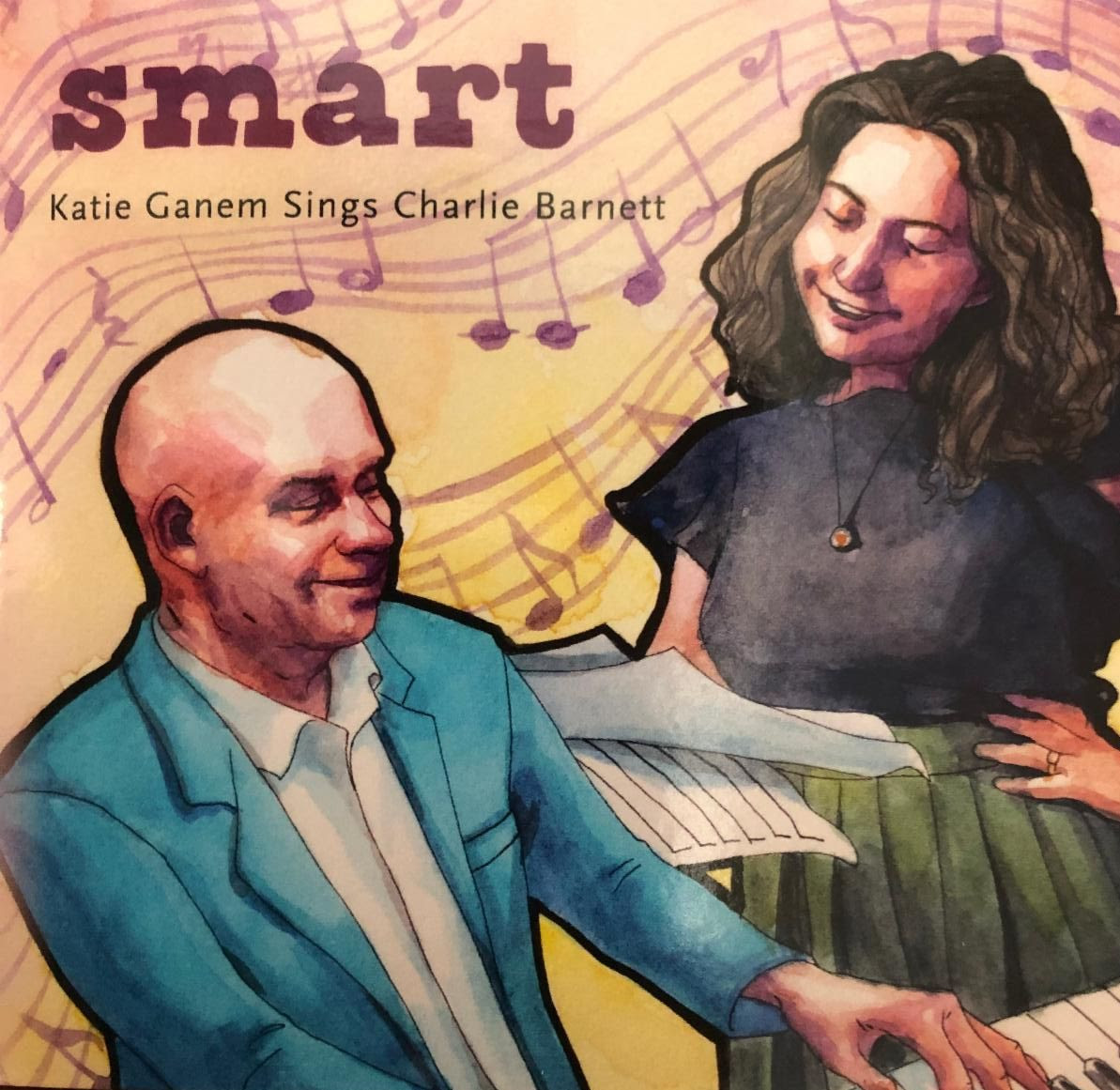
Working with the singer and actress Katie Ganem is a true pleasure. As the star of 19: The Musical, she brought the prickly character of Alice Paul to full and vibrant life on stage. Next, Katie brought her director’s chops to bear on my one-man show, which resulted in the album Charlie Barnett: All by His Own Self. When Katie called me earlier this year to ask if I would be interested in working with her on an album project, I instantly said yes—and that was even before I knew that her idea was to record an album of songs I wrote. The title cut, “Smart,” was written just for her. You can buy the album on Amazon.
I have finished two musicals over the past three years. Of course “finished” is an expedient word that really means, “We’ve stopped changing it…for now.” Musical theater is a collaborative medium, and there are many tasks still to come in the course of getting either of these pieces up on a stage with costumes, sets, lighting and a pit band. Usually, a composer will hand off the orchestration of his songs to a specialist in the art, but for these two shows, I couldn’t bear to. I had to do it myself. To me, the songs aren’t a full artistic statement unless I can have a hand in constructing the final ensemble sound. If you’re curious to hear a few of the final orchestrations for the shows, you can find them at these websites: 19: The Musical, a show about women gaining the right to vote, and When We Get There, a show about a fateful car trip to Selma, Alabama.
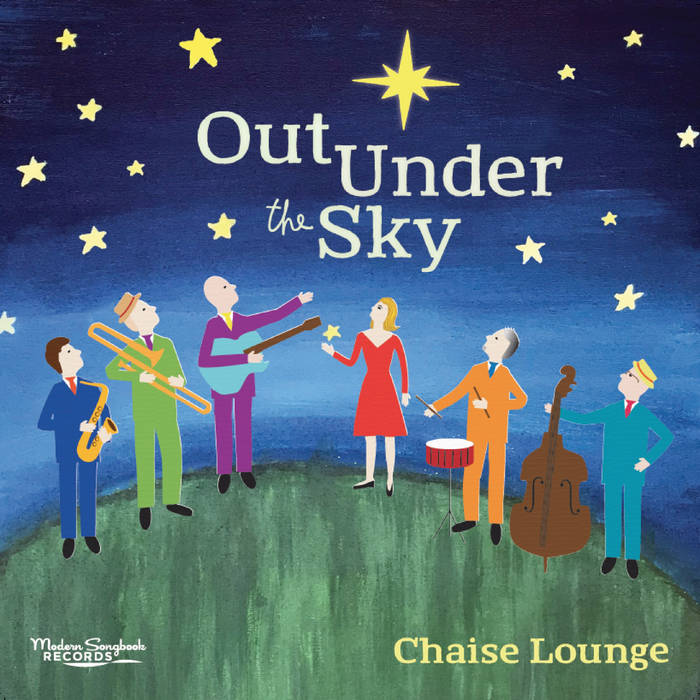
I am pleased and a little surprised to report that Out Under the Sky, the newest CD from my jazz band, Chaise Lounge, made it to number 9 on a national folk music chart. Folk? you say. That’s what I said! But when I thought about it, it made sense. The band has embraced a lot of musical styles that are pretty far afield from our original “1960’s jazz” mission statement. This album has a traditional Appalachian Christmas carol on it, along with a folksy original called “Clean White Snow” and a few roots numbers. I have always struggled to define the music of Chaise Lounge. Maybe it is “folk music that swings.”

I recently finished scoring a doc called Invisible Warriors for the director Gregory Cooke. This film has been a 12-year labor of love for him—the story of Black “Rosie the Riveters,” including his own mother, who joined factory lines during World War II, but whose inspiring stories were not as heralded as those of other Rosies. With little documentation or archival footage of these women, it was a nearly impossible film to put together, but Gregory somehow managed it: The movie had a virtual premiere in March, and there has been a lot of interest from streaming services. The poster for the film, created by art director Gina Cooke, is a portrait of Ruth Wilson, who worked at the Philadelphia Navy Yard during the war and helped build the aircraft carrier the U.S.S. Valley Forge. Ms Wilson recently turned 99. I am rooting for this film and its indefatigable director. It’s time for Ms Wilson and her fellow Rosies to get their due.
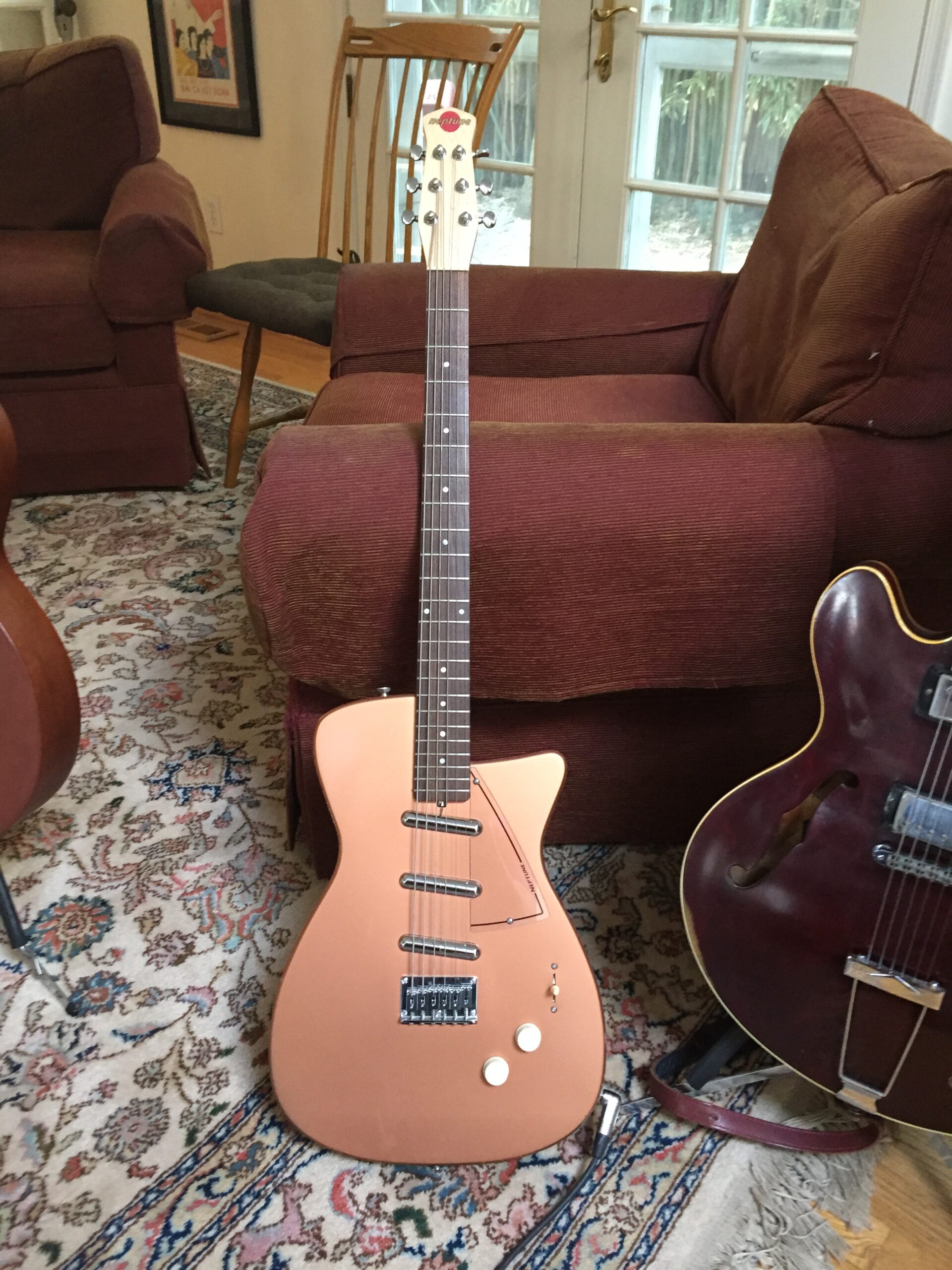
This is the star of today’s recording session. My Neptune baritone guitar. I only use this about twice a year, but it is the only way to get that perfect spaghetti Western sound that we all love. Write your piece in B minor, add tremolo, and you’re there.